Black smoke puffing out of your tailpipe is never a good sign. If you've noticed your car running rough, burning too much fuel, and leaving dark exhaust behind, you might be scratching your head about the cause. One surprisingly common culprit is a faulty engine temperature sensor a small, inexpensive part that can create big problems when it fails. Understanding how a bad coolant temperature sensor leads to a rich fuel mixture and smoke can save you hundreds of dollars in unnecessary repairs and help you fix the real problem fast.
What Does the Engine Temperature Sensor Actually Do?
The engine coolant temperature sensor (often called the CTS or ECT sensor) reads the temperature of your engine's coolant and sends that information to the engine control unit (ECU). The ECU uses this data to decide how much fuel to inject into the combustion chamber.
When the engine is cold, the ECU commands a richer fuel mixture more fuel, less air to help the engine warm up. Once the engine reaches operating temperature, the ECU leans out the mixture for efficient combustion. This is called closed-loop operation.
If the sensor sends a false cold reading even when the engine is warm the ECU keeps dumping extra fuel into the cylinders. That's how a bad temperature sensor makes your car run rich.
Can a Bad Coolant Temperature Sensor Really Cause Rich Running and Smoke?
Yes, absolutely. This is one of the most well-documented effects of a failing CTS. Here's the chain of events:
- The sensor fails or sends an incorrect low-temperature signal to the ECU.
- The ECU thinks the engine is still cold and enriches the fuel mixture.
- Excess fuel enters the combustion chamber but doesn't burn completely.
- Unburned fuel exits through the exhaust, producing black smoke from the tailpipe.
- Fuel economy drops noticeably sometimes by 20% or more.
This condition is not just wasteful. Over time, running rich can damage your catalytic converter, foul spark plugs, and cause carbon buildup in the engine. If you're seeing black smoke caused by a faulty coolant temperature sensor, it's important to address it sooner rather than later.
How Do I Know If My Temperature Sensor Is the Problem?
Several symptoms point to a bad engine temperature sensor. Watch for these signs:
- Black smoke from the exhaust especially when the engine is already warm.
- Poor fuel economy you're filling up more often without changing driving habits.
- Rough idle the engine stumbles or runs unevenly at a standstill.
- Check engine light codes like P0115, P0116, P0117, or P0118 may appear.
- Hard starting in warm weather the ECU floods the engine with fuel it doesn't need.
- Temperature gauge reads erratically jumping around or stuck on cold.
If you've scanned your vehicle and found related trouble codes, OBD2 codes linked to coolant sensor failure and exhaust smoke can help you confirm the diagnosis before replacing parts.
What Happens If I Replace the Sensor but the Smoke Doesn't Stop?
This is a situation many DIY mechanics run into. You replace the coolant temperature sensor, clear the codes, and expect the problem to vanish. But the black smoke keeps coming. Common reasons include:
- Wiring issues a damaged connector or corroded wire can still send false signals even with a new sensor installed.
- Wrong sensor not all CTS parts are the same. Using an incorrect replacement for your make and model can cause the same problem.
- Stuck-open thermostat if the thermostat is stuck open, the coolant never reaches full operating temperature, so the ECU genuinely reads "cold" and enriches the mixture.
- Multiple faults the rich condition may have already caused secondary problems like fouled oxygen sensors or a clogged catalytic converter.
If you recently replaced the sensor and still see issues, check out this breakdown of what went wrong when black smoke appeared after a CTS replacement.
Does a Bad Temperature Sensor Always Produce Black Smoke?
Not always. A sensor that reads falsely high telling the ECU the engine is hotter than it is can cause the opposite problem: a lean mixture. Lean running typically doesn't produce visible smoke but can cause engine knock, overheating, and potential engine damage. However, the more common failure mode is a falsely cold reading, which leads to the rich condition and black exhaust smoke most people notice first.
How Much Does It Cost to Fix a Bad Engine Temperature Sensor?
The sensor itself is usually inexpensive typically between $15 and $50 for the part, depending on your vehicle. If you do the work yourself, the total cost stays low. A shop might charge $80 to $200 for parts and labor combined, depending on how accessible the sensor is on your engine.
Compare that to the cost of a new catalytic converter ($500 to $2,500) or a set of fouled spark plugs and ignition coils, and fixing the sensor early is clearly the smarter financial move.
Can I Drive with a Bad Coolant Temperature Sensor?
You can, but you shouldn't drive long distances or ignore the problem. Running rich for extended periods causes real damage:
- Catalytic converter failure from unburned fuel overheating the substrate
- Spark plug fouling that leads to misfires
- Oil dilution as excess fuel washes down cylinder walls and contaminates the crankcase
- Increased emissions that can cause you to fail an emissions test
Short trips to the parts store or your mechanic are fine. But daily commuting with a known rich-running condition is asking for trouble and expensive trouble at that.
How Do I Test a Coolant Temperature Sensor?
You can test the sensor at home with a basic multimeter. Here's the general process:
- Locate the sensor usually threaded into the engine block, cylinder head, or thermostat housing near where the upper radiator hose connects.
- Disconnect the electrical connector.
- Set your multimeter to measure resistance (ohms).
- Measure resistance across the sensor terminals at different temperatures (cold engine vs. warm engine).
- Compare your readings to the manufacturer's specifications in your service manual.
A sensor that shows no change in resistance as the engine warms up, or one that reads way outside the expected range, is bad and needs replacement. Some mechanics also use an Bebas Neue style scan tool to watch live coolant temperature data if the reading stays stuck at -40°F or shows wildly fluctuating numbers, the sensor or its wiring is the likely issue.
What's the Difference Between a Coolant Temperature Sensor and a Temperature Sending Unit?
Many vehicles have two separate temperature-related components:
- Coolant Temperature Sensor (CTS) sends data to the ECU for fuel management. This is the one that causes rich running and smoke when it fails.
- Temperature Sending Unit sends data to the temperature gauge on your dashboard. A failure here usually just means an inaccurate gauge reading, not a drivability problem.
Make sure you're replacing the right part. On some vehicles, both are located near each other, and confusing them is an easy mistake to make.
Common Mistakes When Dealing with a Rich-Running Condition
If you suspect the temperature sensor is causing your car to run rich and smoke, avoid these pitfalls:
- Throwing parts at the problem don't replace the sensor, oxygen sensor, fuel injectors, and spark plugs all at once without diagnosing first. Test the CTS before buying anything else.
- Ignoring the thermostat a stuck thermostat can mimic a bad sensor. Test or replace it at the same time.
- Not clearing codes after replacement the ECU may still use its old "learned" fuel trim values until you reset it. Clear the codes and let the ECU relearn.
- Using cheap, off-brand sensors an inaccurate cheap sensor can cause the same problem as the original failed one. Use OEM or quality aftermarket parts.
- Skipping the wiring inspection always check the connector and wiring harness before blaming the sensor itself.
Quick Checklist: Diagnosing a Bad Engine Temperature Sensor Causing Rich Running
- ✅ Check for black smoke from the exhaust, especially when the engine is warm
- ✅ Note any drop in fuel economy
- ✅ Scan for OBD2 codes (P0115 through P0118 are most relevant)
- ✅ Watch live coolant temperature data with a scan tool does it make sense?
- ✅ Test the sensor's resistance with a multimeter and compare to specs
- ✅ Inspect the wiring harness and connector for damage or corrosion
- ✅ Check if the thermostat is opening and closing properly
- ✅ Replace the sensor with a quality OEM or trusted aftermarket part
- ✅ Clear codes and drive through several warm-up cycles to let the ECU relearn
- ✅ If smoke persists after replacement, investigate secondary damage (O2 sensors, catalytic converter)
Fixing a bad engine temperature sensor is one of the simplest and cheapest repairs that can resolve a rich-running, smoking engine. Don't ignore it the longer you wait, the more expensive the downstream damage becomes.
 How a Faulty Coolant Sensor Causes Black Exhaust Smoke
 Diagnosing Rich Fuel Mixture: Black Tailpipe Smoke Symptoms Explained
 Black Smoke After Replacing a Coolant Temperature Sensor
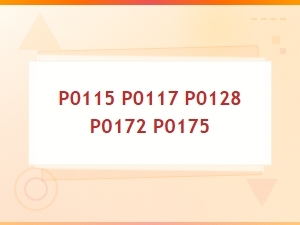 Obd2 Codes for Coolant Sensor Failures and Black Smoke
 How to Replace a Coolant Temperature Sensor to Fix Black Smoke and Rough Idle
 Coolant Temperature Sensor Failure Symptoms Causing Rich Fuel Mixture